On October 11, 2025, Google’s Doodle paid tribute to idli, depicting the process of steaming the dish on a banana leaf. The animated illustration celebrates this South Indian staple and highlights its global recognition.
Soft, fluffy idlis steamed in a vessel and served on banana leaves are central to the design — all signifying the warmth and tradition of South Indian cooking. This Doodle is part of Google’s “Food & Drink” series, which honors beloved local cuisines worldwide. Though the artwork honors Tamil culinary roots, it also nods to the fact that World Idli Day is observed annually on March 30.
From South to North: The Journey of Idli
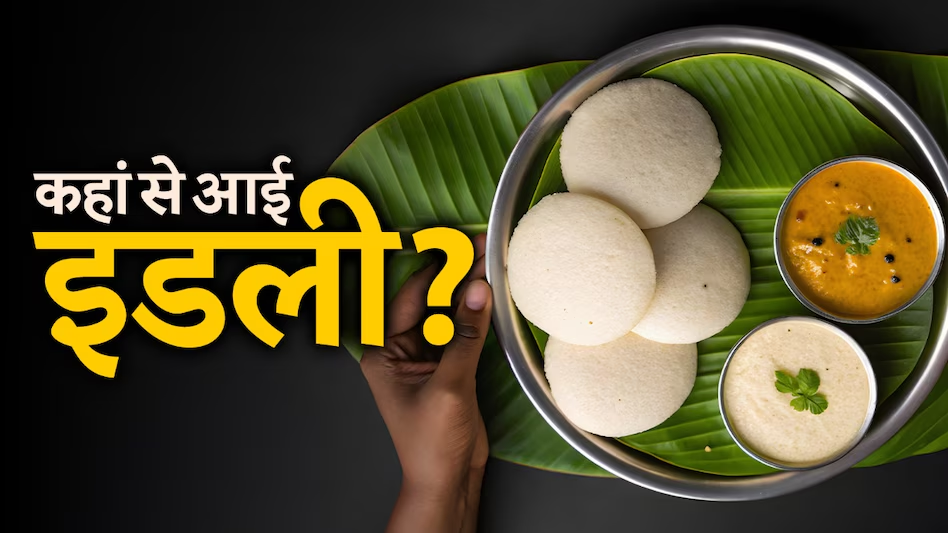
Originating in Tamil Nadu and other parts of South India, idlis have journeyed across India to become a universally loved breakfast. What started as a regional delight is now an integral part of many households, often accompanied by sambar, chutney, and filter coffee.
Nutrition & Digestibility
The World Health Organization recognizes idli as a nutritious food. Because it is fermented, the breakdown of starches makes carbohydrates easier to digest — giving it a reputation comparable to nutritious staples like khichdi.
Tracing Its Origins
Despite being light and easy to digest, idli’s precise origin is shrouded in mystery. Some chefs, including Ranveer Brar, have suggested an Indonesian origin, claiming the recipe may have traveled back to India via maritime trade routes. However, this remains a debated point.
Ancient Vedic texts mention dishes like karav or karab, made from grains and curd and steamed in small receptacles, which some scholars believe may be precursors to modern idli. In the Rigveda, offerings to Soma included such steamed items.
Literary Mentions & Evolution
- The oldest direct reference to something like idli appears in the 920 CE Kannada text Vaddaradhane, mentioning a dish called “Iddilige” made with black gram and buttermilk (though not necessarily steamed).
- By 1025 CE, the work Lokopakara describes preparations closer to idli, and by 1130 CE, King Someshvara III’s treatise Manasollasa mentions a form of idli prepared in royal kitchens.
- The Tamil text Meesai Puranam (17th century) uses the term ittli, while a 1520 Gujarati collection calls it idri. Across regions, local adaptations like addada (in Karnataka) or sanna (hittli) (in Goa) share similarities with idli — made from fermented rice batter and steamed.
The Indonesia Connection
Though the Indonesian claim doesn’t enjoy wide scholarly backing, it is popular in anecdotal narratives. One legend tells of a royal marriage between an Indian princess and an Indonesian king. Alongside her, cooks are said to have brought the recipe for idli (known in Indonesia as kedli), which later evolved. Meanwhile, food historians like K. T. Achaya acknowledge that the modern form of idli — using leavening agents instead of buttermilk — may have been refined over time in India itself.